Research Specifications
- Full Name:
- Long R3 Insulin-like Growth Factor-1
- Modification:
- 13 aa N-terminal extension + Arg3→Glu3 substitution
- Molecular Weight:
- 9,117 Da
- Form:
- Lyophilized powder
- Purity:
- ≥98% (SDS-PAGE and HPLC verified)
- Storage:
- −80°C ideal; −20°C acceptable; 4°C up to 7 days reconstituted
- Reconstitution:
- Acetic acid (0.1%) or bacteriostatic water with 0.1% BSA carrier
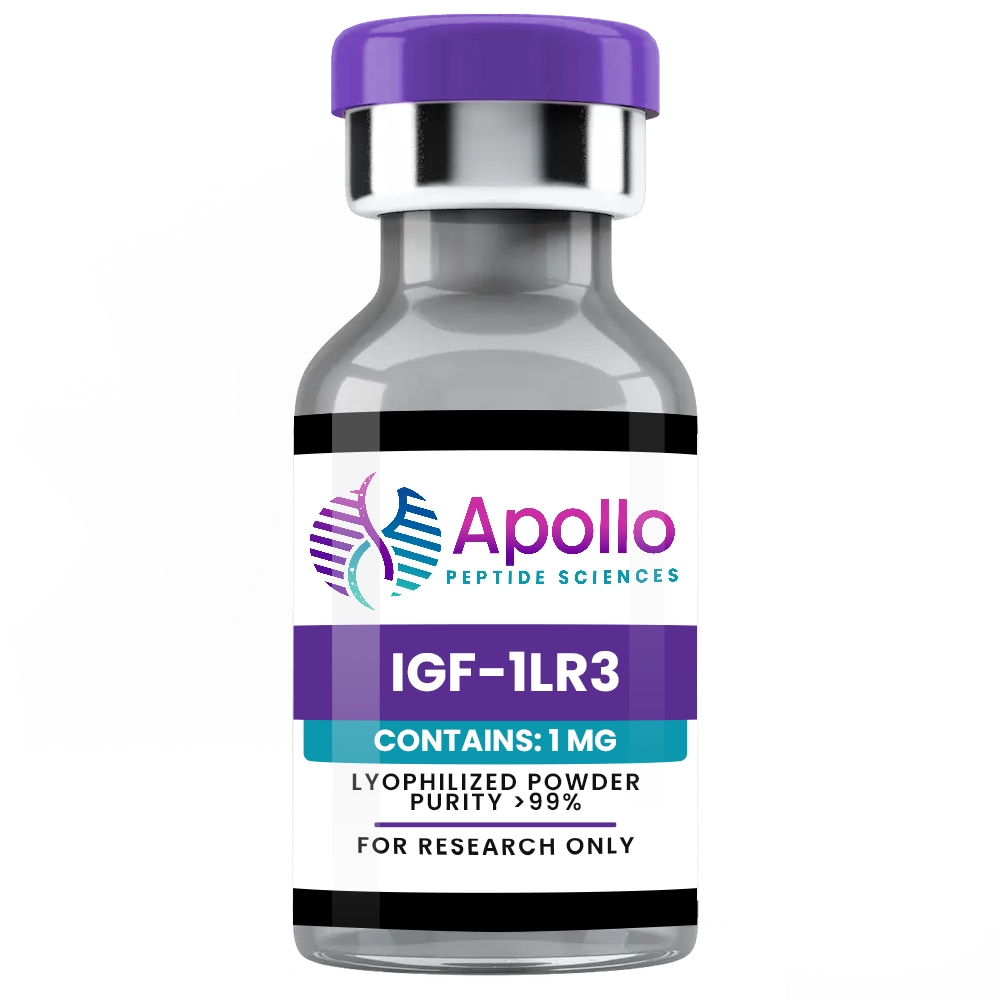
IGF-1LR3 1mg
Long R3 IGF-1 — 83-amino acid analogue of insulin-like growth factor-1 with 3× longer half-life. Researched for skeletal muscle protein synthesis, satellite cell activation, and lean mass accrual.
~20-30h
Half-life (vs 15 min native)
IGFBP-independent activity
83
Amino Acids
+13 N-terminal extension
9.1 kDa
Molecular Weight
LR3 analogue
Receptor Targets
IGF-1 Receptor Agonism & PI3K/mTOR Activation
IGF-1 LR3 (Long R3 Insulin-like Growth Factor-1) is a recombinant analogue of human IGF-1 with an N-terminal 13-amino acid extension and an Arg→Glu substitution at position 3. These modifications dramatically reduce its affinity for IGF binding proteins (IGFBPs), which normally sequester ~98% of circulating IGF-1. The result is a half-life of ~20-30 hours vs ~15 minutes for native IGF-1. IGF-1 LR3 binds the IGF-1 receptor (IGF-1R), activating the PI3K/Akt/mTOR and Ras/MAPK pathways — driving skeletal muscle protein synthesis, satellite cell (muscle stem cell) activation and differentiation, anti-apoptotic signaling, and glucose uptake into muscle tissue.
Research Highlights
Skeletal Muscle Hypertrophy Research
IGF-1 LR3 activates mTORC1 via PI3K/Akt, the central regulator of muscle protein synthesis. In rodent models, IGF-1 overexpression or exogenous IGF-1 LR3 produces dose-dependent muscle hypertrophy, increased fiber cross-sectional area, and satellite cell proliferation. The extended half-life of LR3 vs native IGF-1 amplifies these effects over a research window.
Satellite Cell Activation
IGF-1 signaling is a primary regulator of satellite cell (muscle stem cell) quiescence/activation. IGF-1 LR3 in vitro and in vivo promotes satellite cell entry into the cell cycle, differentiation into myoblasts, and fusion with existing myofibers — the cellular mechanism of muscle repair and hypertrophy. This makes it particularly relevant to research examining muscle regeneration after atrophy.
Lean Mass Preservation in Caloric Restriction Research
In caloric restriction models where GLP-1 agonists reduce total body weight, IGF-1 signaling supports the preservation of lean mass. Research protocols pairing IGF-1 LR3 with tirzepatide or retatrutide investigate whether exogenous IGF-1 activity can maintain anabolic signaling in muscle during significant caloric deficit — directly relevant to body composition outcomes in looksmaxxing research.
Research FAQ
What is the difference between IGF-1 and IGF-1 LR3?
Does IGF-1 LR3 affect blood glucose?
How should IGF-1 LR3 be reconstituted?
How does IGF-1 LR3 complement retatrutide or tirzepatide protocols?
Research Use Only. This product is intended for in-vitro laboratory research only. Not for human consumption, injection, or therapeutic use. Not medical advice. Always consult applicable regulations in your jurisdiction.
Price Comparison
| Supplier | Purity | Price | Shipping |
|---|---|---|---|
| Apollo (via ClavTides) | >98% HPLC | $79.99 | Free over $200 |
| Generic Research Suppliers | Varies (often <95%) | Similar–Higher | Varies |
| Pharmaceutical (Rx only) | Pharmaceutical grade | Not available for research | Rx required |
IGF-1LR3 1mg
$79.99